
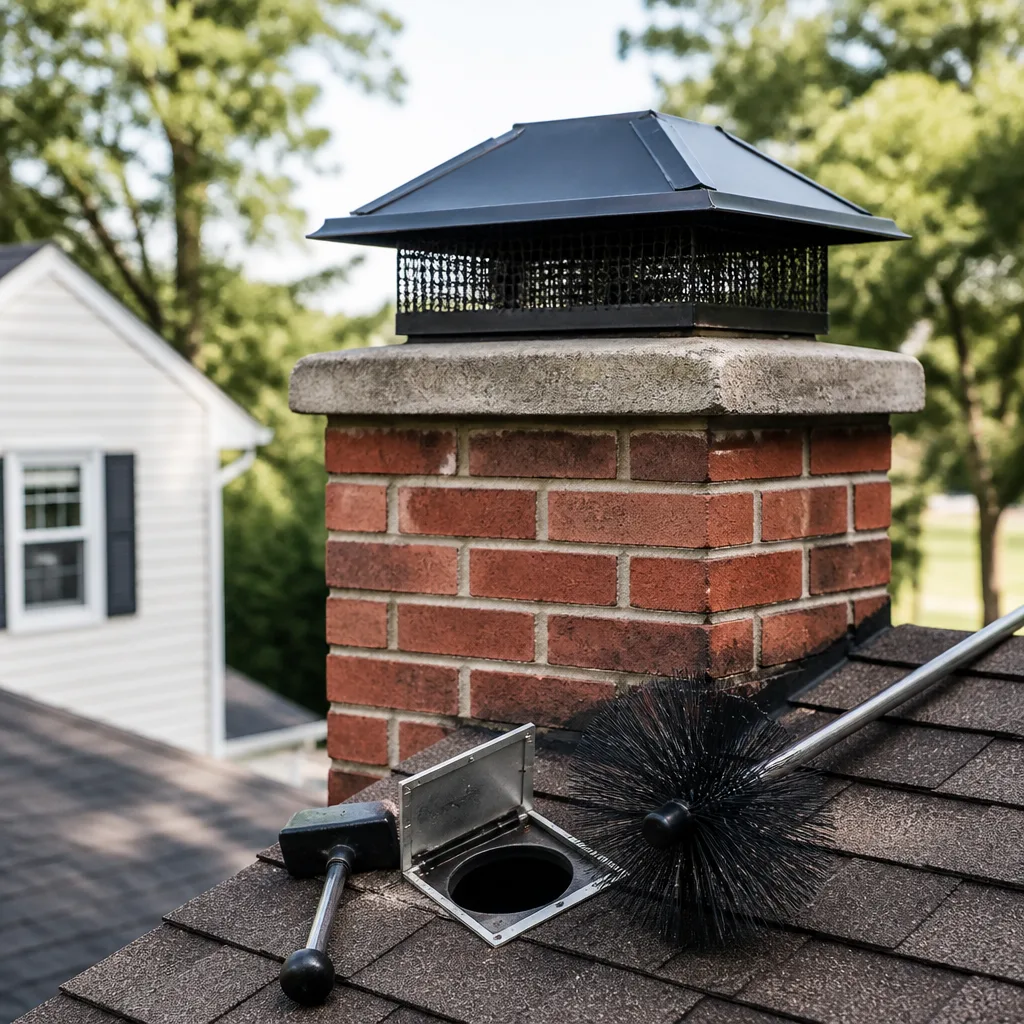
Level 1 sweep and inspection to the NFPA 211 annual standard - flue, crown, cap, and flashing checked and photographed
Chimney sweep logs do not sweep chimneys. They loosen some creosote - which then falls where a brush and vacuum still have to collect it.
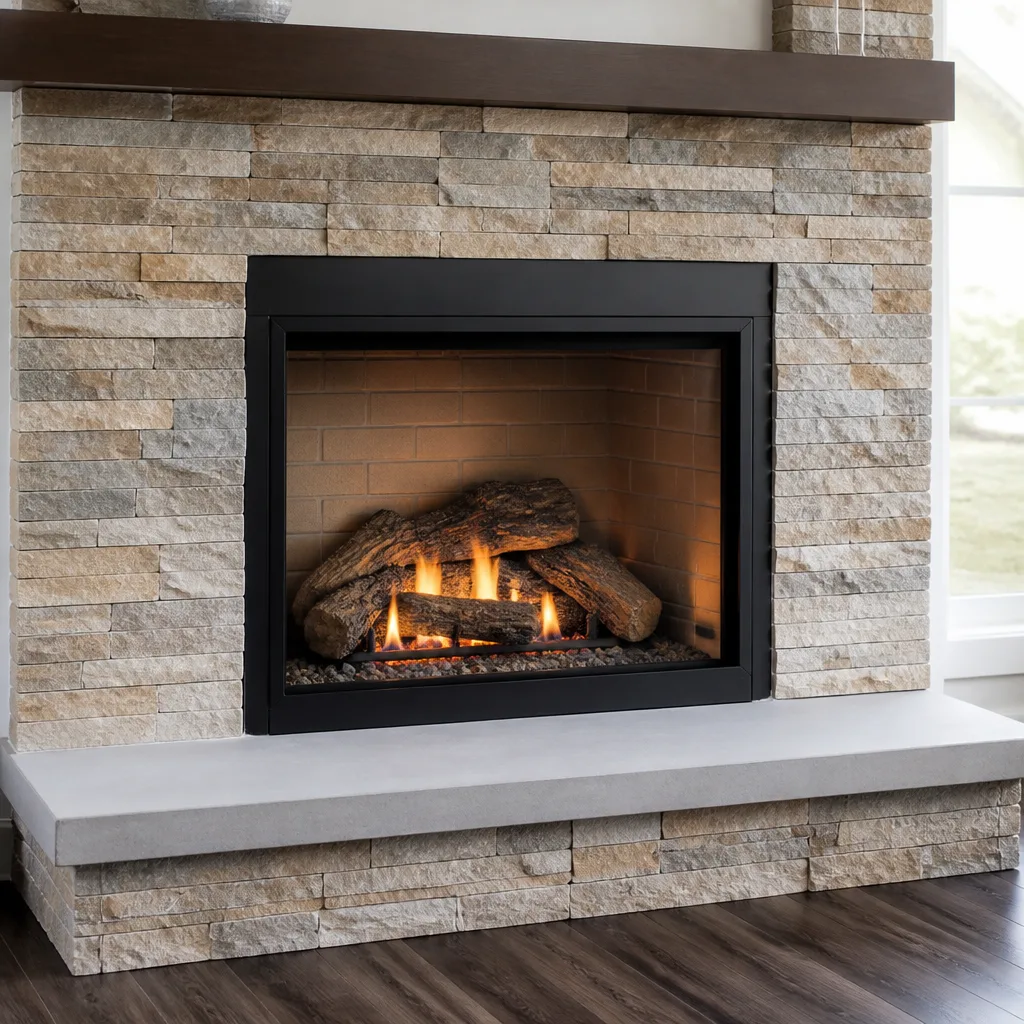
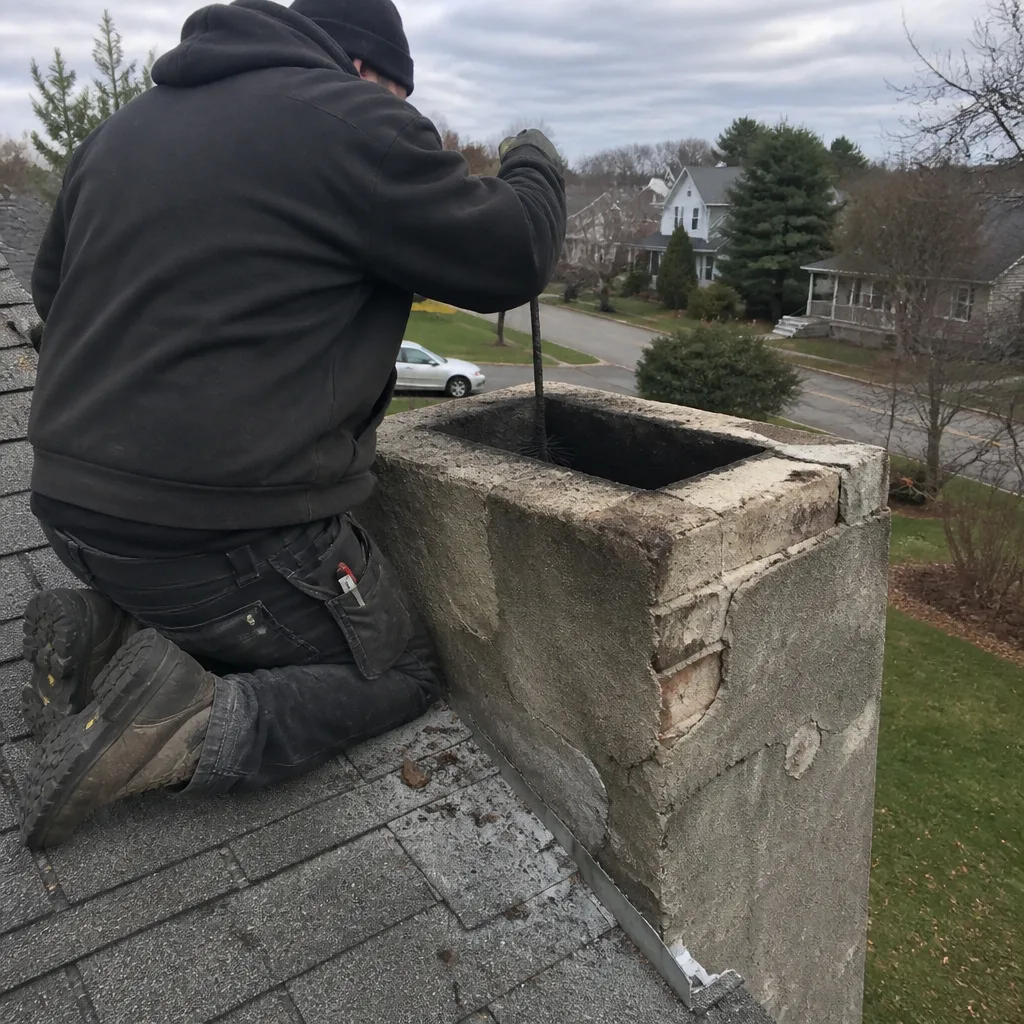 Before
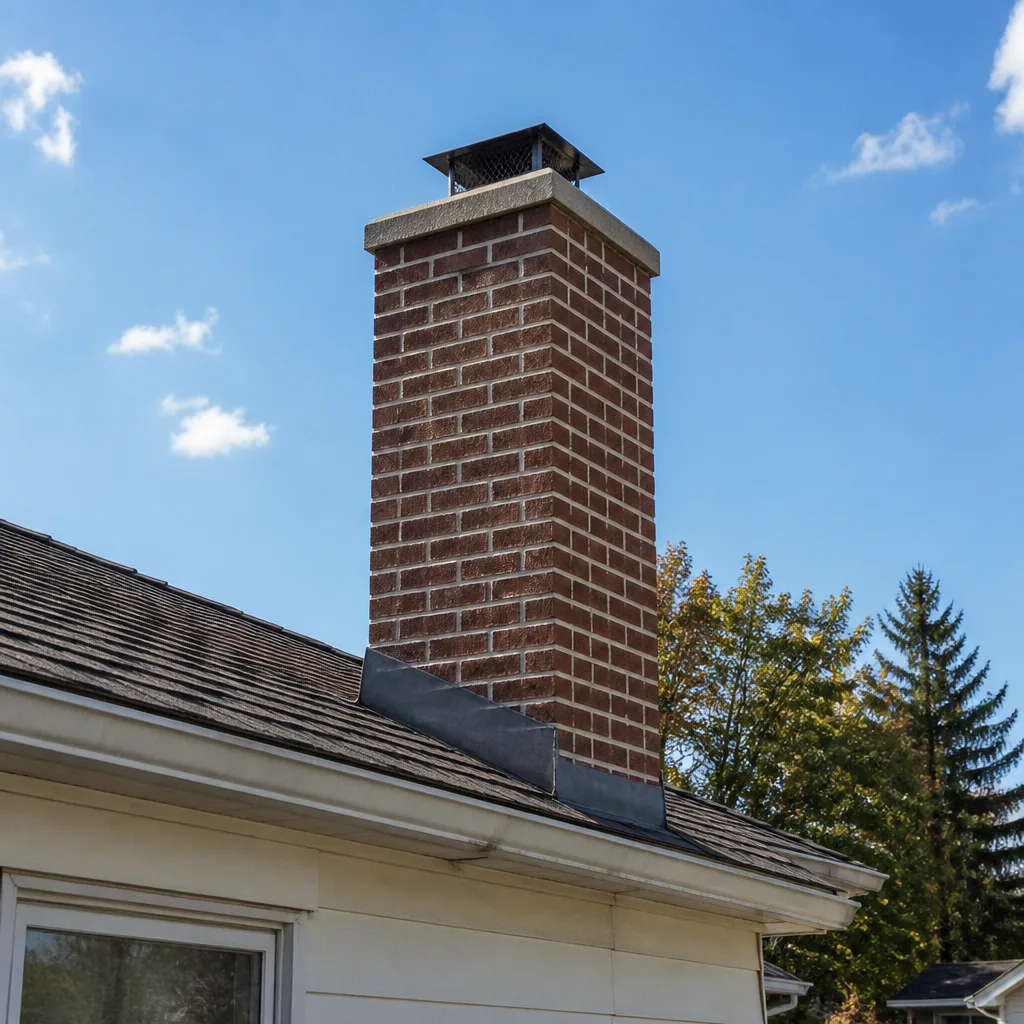 After
After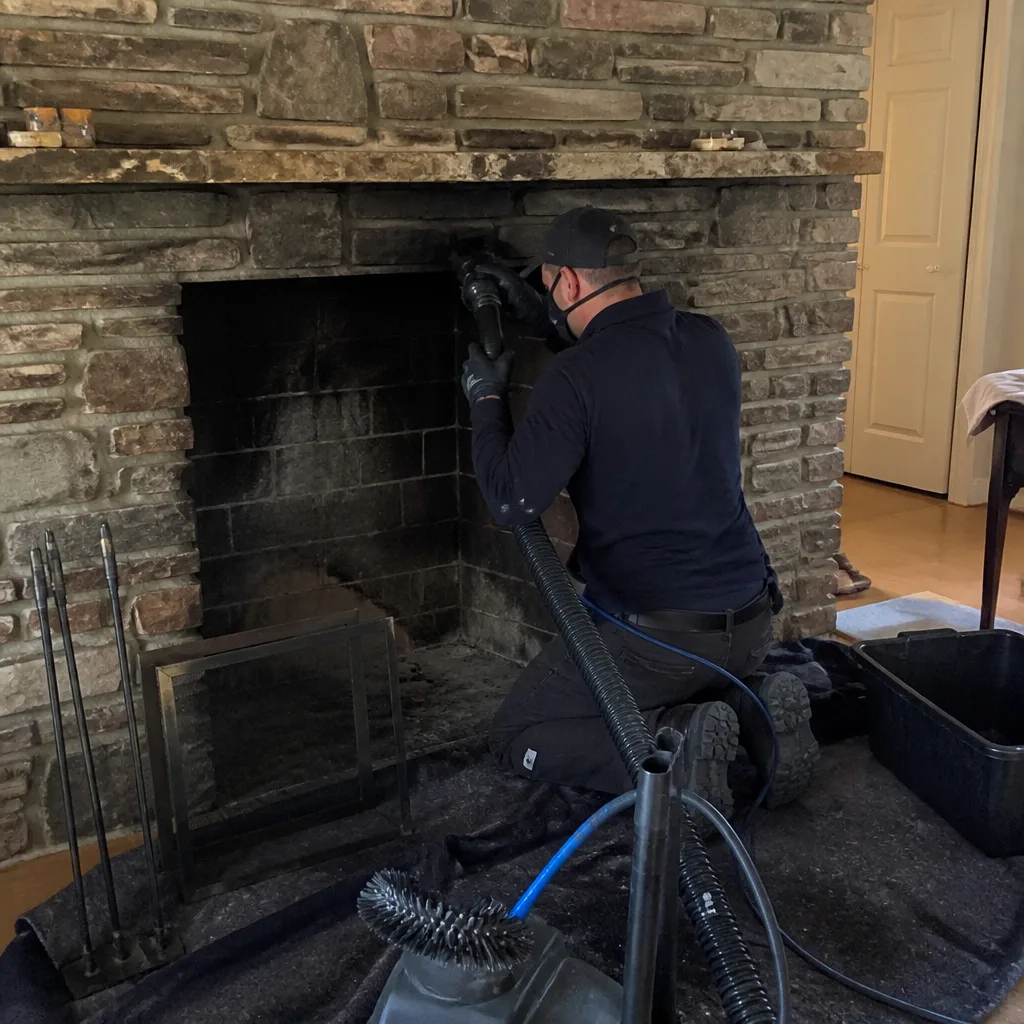 Before
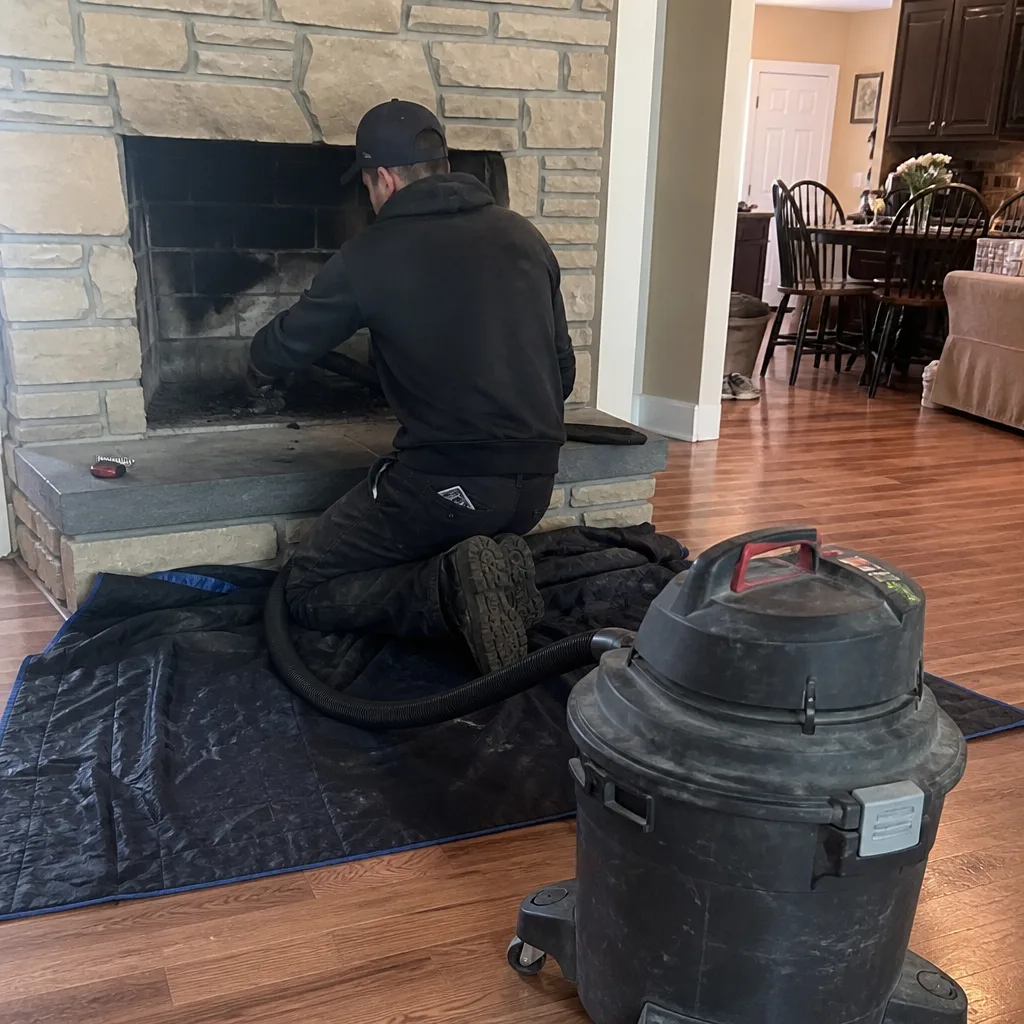 After
After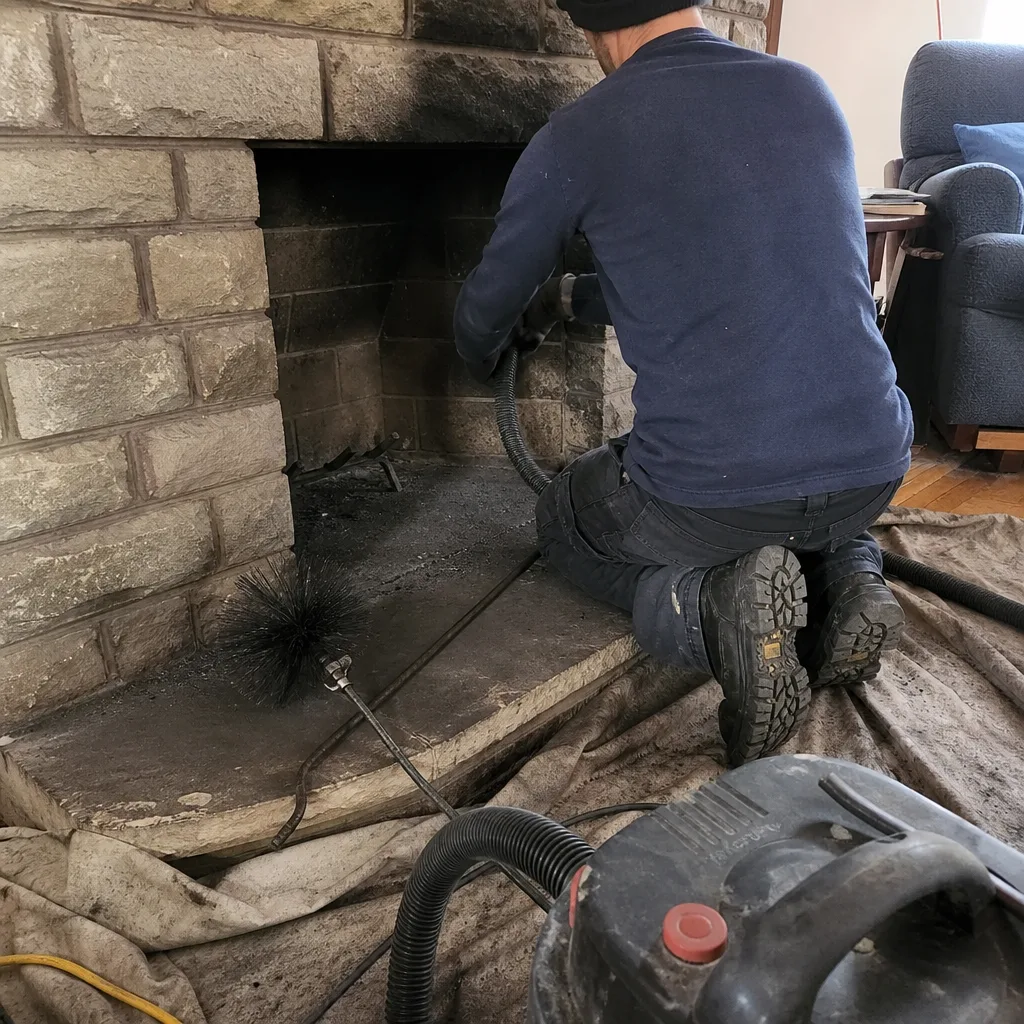 Before
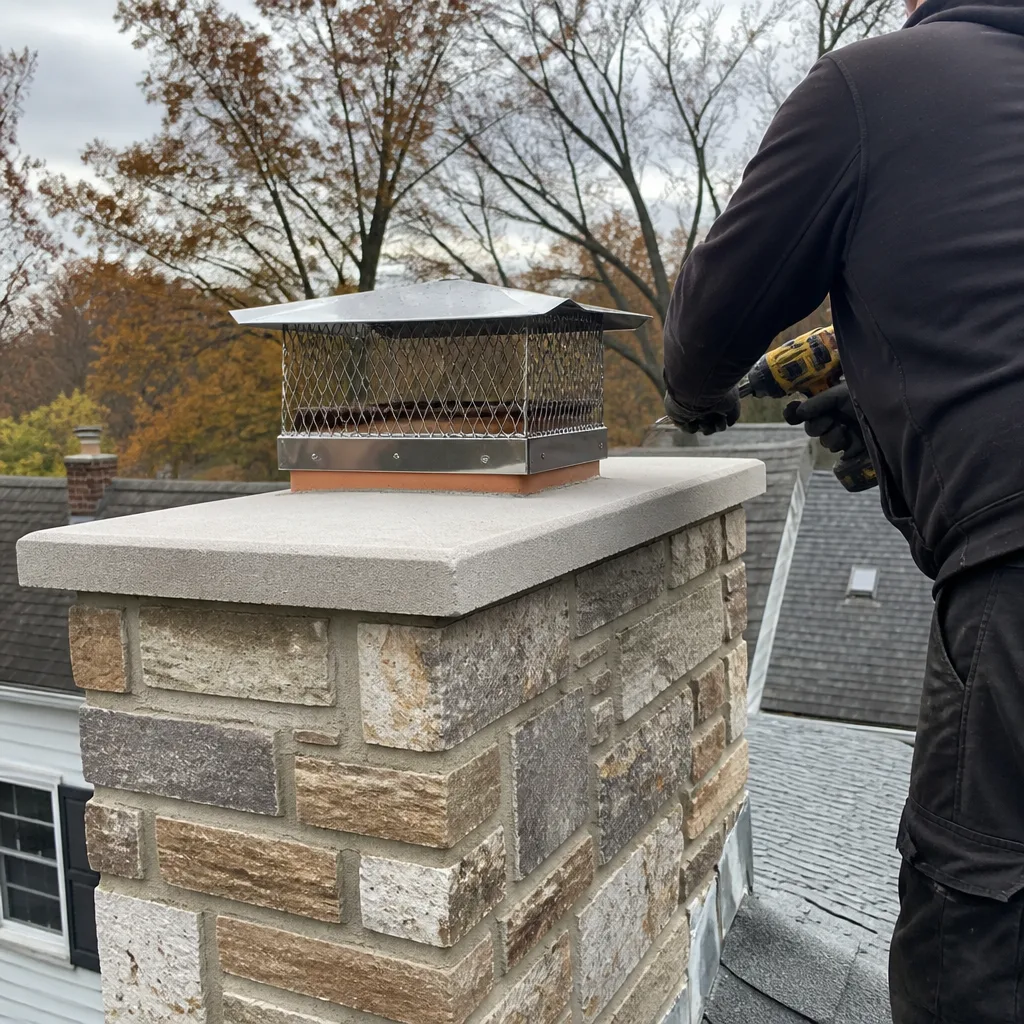 After
AfterGelco Flue Liner Replacement: The Bethlehem Owner’s Guide
We stock and install Gelco-compatible flue liner replacement in Bethlehem, with most jobs running $1,800 to $3,400 installed depending on height, diameter, and whether the existing top plate needs replacing. Most Gelco stainless steel liner swaps we book in Bethlehem are completed in a single day, and we carry common diameters from 5 to 8 inches on our trucks. Homeowners usually discover the problem during their pre-burning-season sweep, when our camera turns up gaps, corrosion pinholes, or separated joints in the liner wall that weren’t visible from the firebox.
Which Gelco Models This Applies To
Gelco has produced flue liners under several series names over the years, and the label on your top plate or the stamp near the collar is what tells us what you’ve got. The Gelco Pro-Series, Gelco Ultra, and earlier Gelco 316Ti flexible liners are the ones we see most often in Bethlehem homes built between 1970 and 2000, especially in the Hill-to-Hill district and the older neighborhoods off Schoenersville Road where masonry chimneys were retrofitted with metal liners during the oil-crisis era.
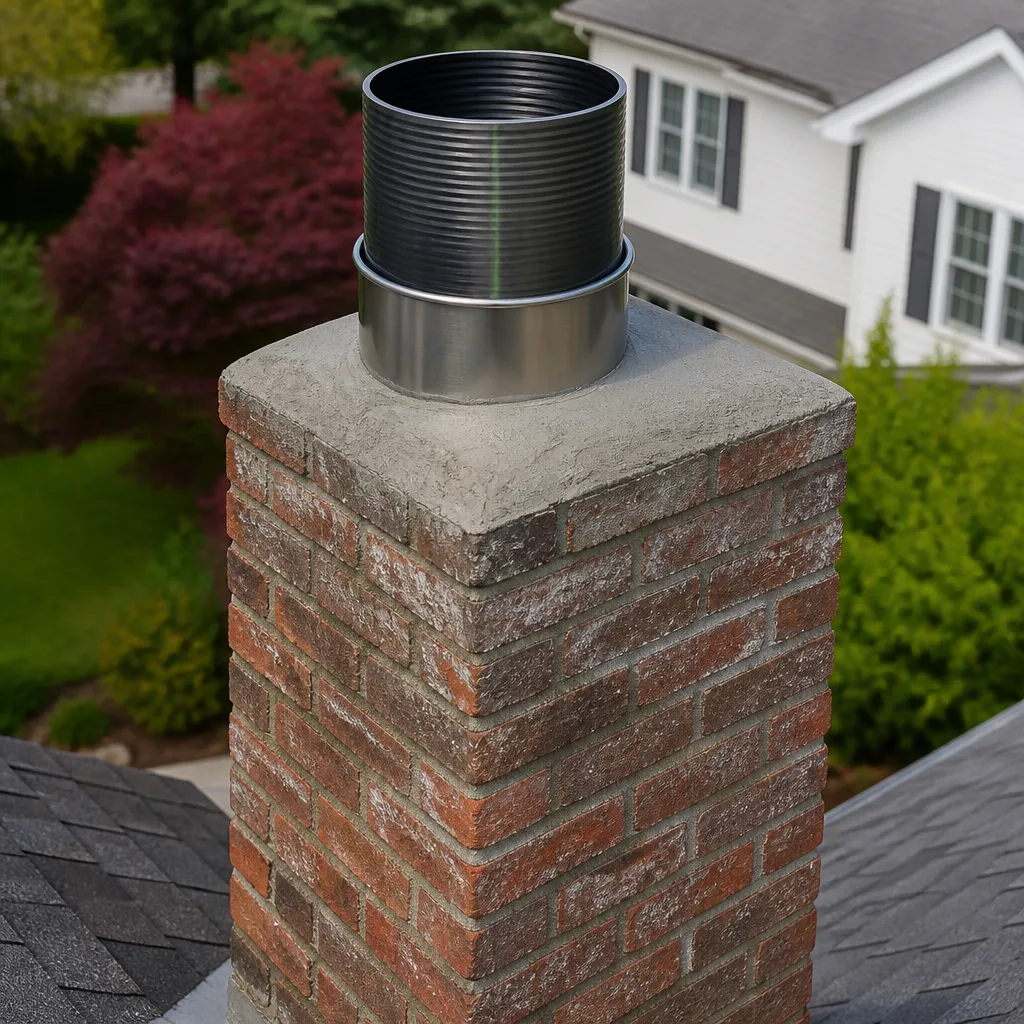
To identify yours: look for a stamped metal tag on the top plate or a printed band near the upper collar showing the diameter, alloy grade (316 or 316Ti), and manufacturing date. If the tag is corroded off, we measure the inner diameter with a chimney ruler and check the wall thickness with a caliper. Gelco’s 316Ti alloy is the heavier-duty variant, rated for higher condensation resistance, and we match it with Gelco OEM replacement or an equivalent 316Ti from our Olympia Chimney stock when the original spec demands it. Aftermarket equivalents save some cost, but for Bethlehem’s wet freeze-thaw cycles we generally recommend staying with 316Ti minimum rather than dropping to standard 304 stainless.
One compatibility gotcha we run into: Gelco’s older Pro-Series used a proprietary top plate with a narrower collar diameter than current production. The new liner will fit the flue, but the top plate and rain cap assembly may need updating too. We check this during our initial camera inspection so you’re not surprised by an additional part mid-job.
Signs Your Gelco Flue Liner Replacement Is Failing
- White or greenish powder on the liner wall. This is chloride corrosion, accelerated by Bethlehem’s humid summers and the temperature swings we get in March and November. The 316Ti alloy resists it better than standard grades, but after 20 to 25 years the protective layer breaks down and pitting begins.
- Visible gaps or separation at liner joints. Gelco liners are corrugated for flexibility, and each section locks into the next with a crimped joint. Thermal cycling loosens these over time, especially if the original installer didn’t fully seat the sections. Gaps let combustion gases leak into the chimney cavity.
- Water staining on the chimney breast or nearby wall. A compromised liner allows acidic condensation to reach the masonry. In Bethlehem’s older homes with plaster lathe walls, this shows up as bubbling paint or a musty smell near the fireplace, often before any visible liner damage is obvious from below.
- Flakes of metal or rust-colored debris in the cleanout. This means the liner wall is actively shedding material. Stainless steel shouldn’t rust, but once the surface is breached the underlying steel oxidizes. By the time you’re seeing flakes, the wall thickness has dropped below safe levels.
- Draft problems or smoke spillage into the room. A liner with holes or separations disrupts the designed draft. Your fireplace or appliance worked fine for years and now it doesn’t, even with the damper open and no obvious blockage. The liner is the likely culprit.
Replacement Cost & What’s Included
| Component | Typical Range (Bethlehem) |
|---|---|
| Gelco-compatible 316Ti liner (materials only) | $900 - $1,800 |
| Labor: removal, installation, top plate, cap | $700 - $1,300 |
| Insulation blanket (required by code for solid fuel) | $200 - $400 |
| Total installed with warranty | $1,800 - $3,400 |
The spread depends on three things: how many stories we’re running (a three-story colonial on Bethlehem’s south side takes longer than a ranch in Hanover Township), whether the existing top plate and cap are reusable, and whether we find hidden damage in the surrounding masonry once the old liner is out. We price this upfront after our camera inspection, not after we’ve started the job. The number on the estimate is the number on the invoice.
Every Gelco liner replacement we install carries our 90-Day Done Right Promise in writing. If it’s not right, we come back. No paperwork to dig up, no arguing. We’re also not affiliated with Gelco as a company, we’re an independent service provider, but we’ve worked with their products long enough to know what works and what doesn’t in Pennsylvania weather.
DIY or Call Us?
There’s a short list of things a homeowner can safely check: look for the Gelco label on the top plate from the roof if you’re comfortable on a ladder, note any water stains inside the firebox, and listen for odd draft sounds when the appliance runs. What you should not do is attempt to remove or install a flue liner yourself.
A Gelco liner run is a single heavy assembly, often 25 to 35 feet of stainless steel that has to be lowered or pulled without kinking the corrugations or tearing the insulation. The top plate must be sealed to the chimney crown with proper high-temp sealant, and the bottom connection to the appliance or thimble has to be gas-tight. More critically, working on a chimney involves heights, steep roofs common in Bethlehem’s older neighborhoods, and sometimes confined flue spaces. We’ve seen DIY attempts that ended with a liner stuck halfway, a damaged crown, or a trip to the ER. The cost of fixing a botched install usually exceeds what we charge to do it right the first time.
Call us at (610) 595-5754 and we’ll walk through what we found, what it costs, and when we can get it done.
FAQs
A properly installed Gelco 316Ti liner typically lasts 20 to 30 years in Bethlehem’s climate, though we’ve seen premature failure in homes where the liner was oversized for the appliance or where burning green wood created excessive acidic condensation. Annual inspection catches problems before they become dangerous. Call (610) 595-5754 to schedule yours.
Small, accessible gaps near the top can sometimes be patched with a stainless steel repair sleeve, but this is a temporary fix. Once corrosion or joint separation appears along the run, replacement is the only code-compliant and safe solution. We show you the camera footage and give you a straight recommendation. If it needs doing, we’ll tell you. If it doesn’t, we’ll tell you that too.
Most Gelco liner replacements we complete in Bethlehem take four to six hours from setup to final inspection, assuming no hidden masonry damage. We arrive with the liner, insulation, top plate, and cap on the truck, so there’s no waiting for parts. Our technicians are background-checked and uniformed, and they clean up before they leave.
We stock Gelco-compatible 316Ti liners in diameters from 5 to 8 inches on our service trucks, along with Olympia Chimney equivalents when the spec allows. You don’t need to source anything. We measure, we match, we install, and we warranty the work. Call (610) 595-5754 for a free estimate.
Written by Russell Haines, Owner, Hearthstone Chimney Co. at Hearthstone Chimney Co., serving Bethlehem and nearby areas.